Pistachio psylla
A tiny jumping sap-sucking insect that is the most important pest of pistachio in Turkey and Iran. It weakens trees and produces sticky honeydew.
How to recognise
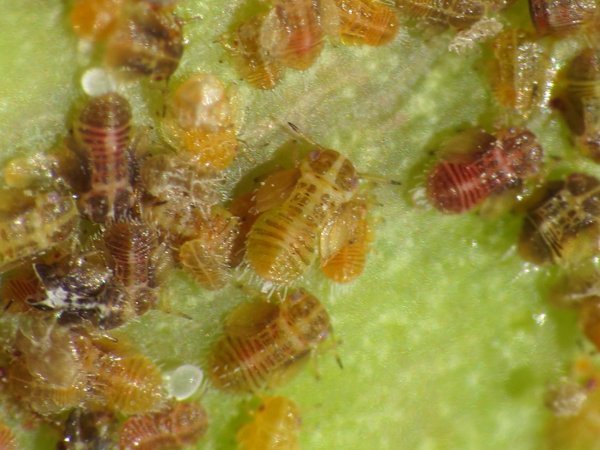
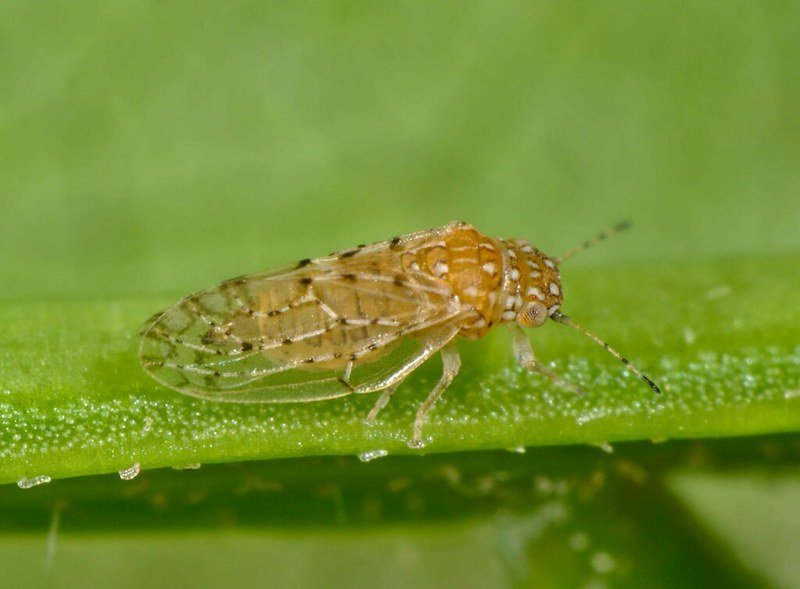
Sticky, shiny honeydew on leaves and fruit clusters, often with black sooty mould and ants. Tiny greenish or yellowish flat nymphs on the underside of leaves; adults are 2-3 mm and jump. Heavy infestation causes leaf drop, poor nut fill and smaller nuts.
Causes & conditions
Several generations a year; populations rise in spring and again in summer on soft new growth, especially with excess nitrogen and dusty, water-stressed trees. Broad-spectrum sprays kill the natural enemies and make outbreaks worse.
What to do
- Do not spray in July and August, when natural enemies are most active.
- Key helpers include the Predatory bugs (Orius, Macrolophus) Anthocoris minki and Piocoris luridus, and parasitic wasps (Psyllaephagus).
- Avoid too much nitrogen and late irrigation that pushes soft growth.
- Wash off honeydew and nymphs with water spray, or use a light soap or Horticultural & neem oil spray on small trees, and do not spray during flowering.
- Prune to open the canopy.
- Spray Insecticidal soap, Horticultural & neem oil (Horticultural & Horticultural & neem oil) or Garlic-chili spray, and release or attract ladybirds and lacewings (Ladybirds & lacewings) and Predatory mites.
- Sticky traps (Sticky & pheromone traps) catch adults, and Kaolin clay film deters them.
- Fermented herbal tonic (OHN) (Fermented herbal tonic (Fermented herbal tonic (OHN))) keeps plants vigorous.
Cautions
Neem and soap sprays also hurt beneficial insects; use only if necessary and avoid hot hours and flowering. Tree health and conserving predators are the long-term solution.
Photos