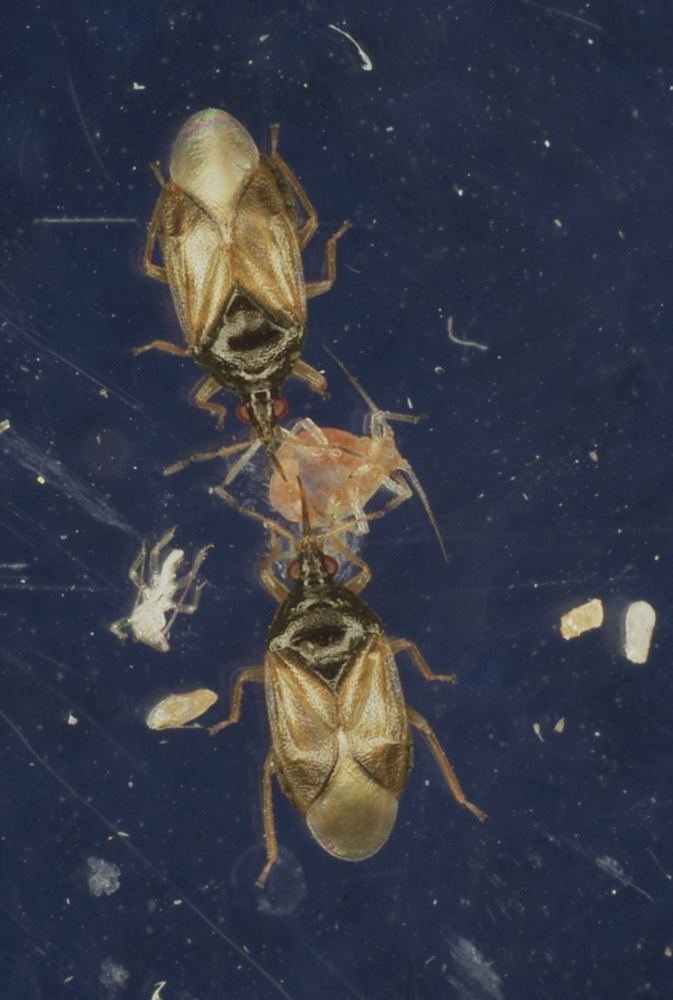
Predatory bugs (Orius, Macrolophus)
Small hunting bugs that pierce and drain their prey. Orius (minute pirate bugs) eat thrips, aphids, spider mites and small caterpillars. Macrolophus pygmaeus, a predatory mirid bug, eats whitefly, mites, aphids and moth eggs, including those of the tomato leaf miner. They are bought from suppliers and released in greenhouses.
Conditions
These predators settle best on plants with flowers, pollen or soft hairy leaves, such as pepper, aubergine and tomato, and where there is some prey early. Orius needs pollen and nectar to stay when prey is scarce, and may slow down or stop breeding in short winter days and cold. Macrolophus is slower to build up but lasts a long time on tomato. Both are harmed by many sprays.
What you need
- Pack of Orius or Macrolophus from a registered supplier; the label shows the species, number and use-by date
- Hand lens for weekly scouting
- Flowering plants or a banker plant, such as flowering pepper or mullein (optional)
- A soft brush or a small cup to place the predators gently
- A notebook to record counts and release dates
- A thermometer for the greenhouse
How to make it
- Identify the pest. Choose Orius for thrips (especially flower thrips) in pepper, strawberry, cucumber and other flowering crops, and Macrolophus for whitefly and tomato leaf miner eggs in tomato.
- Stop broad-spectrum sprays before release. Residues from many insecticides can harm these predators for weeks to months, so tell the supplier what you have used.
- Order them to arrive when pests are first seen or even earlier, on young plants. Check with the supplier on the right season, since Orius is slow in short days and cold weather.
- Receive the pack and release it the same day. Keep it cool and dark until release and do not leave it in the sun.
- Open the tube or bottle and sprinkle the contents gently on leaves or in the flowers near the pests, or place it in the shelter that the supplier supplies. Release in several places at the rate on the label.
- Release early and often. For Macrolophus, plan to release several times; it builds up slowly and the first weeks matter.
- Support them with flowers or pollen. Flowering pepper plants, pollen supplements from the supplier or a banker plant such as mullein can help Orius and Macrolophus stay in the crop. Follow the supplier's advice.
- Check every week with a hand lens: look in the flowers for Orius and on the leaf tips for Macrolophus.
- Watch tomato stems and fruit for damage. If you see brown rings on stems or pale spots on fruit and few prey, the mirid is feeding on the plant; stop releasing and give it more prey, or check with your supplier.
- Avoid sticky cards near the plants, since they also catch the predators (Sticky & pheromone traps).
- Use with other natural enemies such as Parasitoid wasps (Aphidius, Encarsia, Eretmocerus), Predatory mites or Ladybirds & lacewings for a whole programme.
How much it makes
A single pack contains a stated number of predators (often several hundred to a thousand) and covers the area given on the label. For a small greenhouse of 100 square metres, follow the supplier's rate for your crop and plan repeat releases rather than one large one.
How to use it
- Dilution: as the supplier advises; use the number of predators per area on the label.
- Release on arrival, in the cool of the day, in several spots.
- Release early, on young plants and while pests are few.
- Provide flowers or pollen if prey is scarce.
- Avoid sprays during the programme.
- Check weekly with a hand lens and watch for plant damage.
Signs it worked
Orius adults are about 2 to 3 millimetres long, oval and flat, black with pale or brown wing patches. Their nymphs are small, yellow to orange and quick. Macrolophus adults are about 3 to 4 millimetres, slim and pale green with long antennae, and the nymphs are pale green. Success is seen as the predators on flowers or leaf tips, together with fewer thrips or whitefly. Failure is many pests, no predators found, or pale feeding marks on plants.
Storage
Do not store the predators. Use them within a day of arrival. If you must wait a few hours, keep the pack cool (about 10 to 15 degrees Celsius), dark, upright and out of the sun, and never freeze it.
If something goes wrong
- Predators cannot be found after two weeks: they may have been killed by a spray residue, or prey was too scarce. Check past sprays and release again with some pollen or prey.
- Pests keep rising: the release was too late or too small. Release more, earlier, and add another natural enemy (Parasitoid wasps (Aphidius, Encarsia, Eretmocerus)).
- Marks on tomato stems or flowers: mirid feeding because prey is low. Stop releasing and ask the supplier for advice.
- Orius disappears in winter: short days and cold slow it. Release again when days lengthen.
- Sticky cards catch many predators: remove most of them.
Cautions
Check the supplier's species and use only for crops that match. Do not release non-native species outdoors without checking local rules. Mirid bugs can feed on tomato plants when prey is scarce and can cause marks on stems, flowers and fruit, so monitor and ask for advice. Orius may bite human skin lightly, which is harmless but annoying. Avoid insecticide sprays during the programme and for the weeks that residues last. Keep the packs away from heat and direct sun.