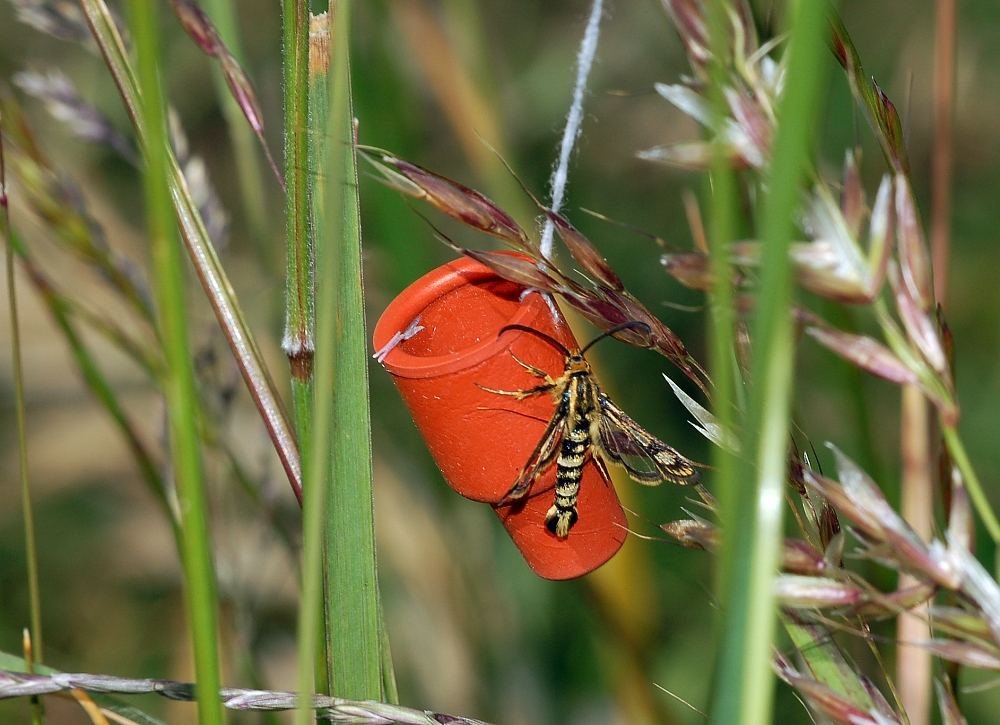
Coloured sticky cards and scent-baited traps to monitor pests and reduce flying insects.
Dilution / rate1 card per 2-4 m² in greenhouses; fewer outdoors for monitoring
📅WhenFrom transplanting or before the expected flight
🌾CropsGreenhouses, vegetables, fruit trees
🧺What you need
Yellow sticky cards, about 10 x 25 cm, for aphids, whiteflies, leafminers, fungus gnats and leafhoppers.
Blue sticky cards of the same size, for thrips.
Pheromone trap with a lure made for ONE named moth species (for example codling moth, Tuta absoluta or grape berry moth), and a sticky insert.
Sticky tree bands or glue-barrier tape, for ants climbing trunks.
Wire, string or clips and a stake or cane, to hang the cards.
Gloves, to handle sticky cards and bands.
A notebook, to record the weekly catch.
🧪How to make it
Decide what you want: monitoring (to learn which pest is present and when) or reducing numbers of flying insects. Cards do both a little; pheromone traps are for timing only.
For a greenhouse, buy enough yellow cards for about 1 card per 2-4 m². Outdoors use fewer, only for monitoring.
Hang yellow cards just above the top of the crop, a few per bed or greenhouse. Use blue cards the same way if thrips are a problem.
Raise the cards as the crop grows, so they always stay just above the leaves.
Put the cards in place at transplanting, or before the expected flight, so you catch the first pests early.
For a pheromone trap, choose the lure for the exact moth species. Open it with gloves and place it in the trap as the pack says; do not touch the lure with bare hands.
Hang the pheromone trap at the height and in the position shown on the pack, usually in the crop or tree canopy, and away from other traps.
For ants, wrap a sticky band around the trunk and press it tight to the bark so ants cannot cross underneath. Keep grass and branches from bridging it.
Check cards and traps at least once a week. Count the insects and write down the date and number.
Replace a card when it is covered with insects or dust, and replace the pheromone lure on the label schedule.
Take the cards down when they are not needed, and keep them away from flowers where bees and other beneficial insects visit.
⚖️How much it makes
In a greenhouse, use 1 yellow card per 2-4 m², so 100 m² needs about 25-50 cards. Outdoors use fewer, and one pheromone trap is for one moth species.
💧How to use it
Density: 1 card per 2-4 m² in greenhouses; fewer outdoors for monitoring.
Hang cards from transplanting, or before the expected flight, just above the crop height, and move them up as plants grow.
Use a pheromone trap to find when the flight of one moth species starts, so that other controls can be timed.
Put sticky bands on trunks to stop ants climbing.
Check weekly and record the numbers. A yellow bucket or board coated with a film of sticky oil is a home-made version that attracts aphids, whiteflies and psyllids. Traps like these lower numbers so that other measures work better; they never clear a pest completely.
✅Signs it worked
A working card is a bright, tacky surface with small flying insects stuck on it; the numbers show the pest level. A card that is dusty, wet or covered with insects needs changing. A pheromone trap that catches nothing may have the wrong lure, a dried-out lure or be placed in the wrong spot.
🏺Storage
Keep unused cards in their wrapper, flat and cool, out of the sun, and away from dust. Store pheromone lures sealed in a cool place as the label says, and do not mix lures in the same bag.
🛠️If something goes wrong
The card catches nothing: the pest is not present, the card is too high or low, or the wrong colour is used. Lower or raise it just above the crop and use yellow or blue as suited.
Card catches many bees and beneficial insects: it is near flowers. Move it away and take it down when not needed.
Pheromone trap has no catch: wrong species lure, old lure or wrong height. Check the pack and replace the lure.
Card gets dusty or wet and loses its stickiness: replace it.
Ants cross the band: the band is loose or bridged by grass or branches. Press it tight and cut away bridges.
⚠️Cautions
Sticky cards also catch beneficial insects: take them down when not needed, and keep them away from flowers. Wear gloves, as the glue is hard to remove from skin. Do not let animals or birds touch them, and dispose of used cards and bands with household waste, not in the field.