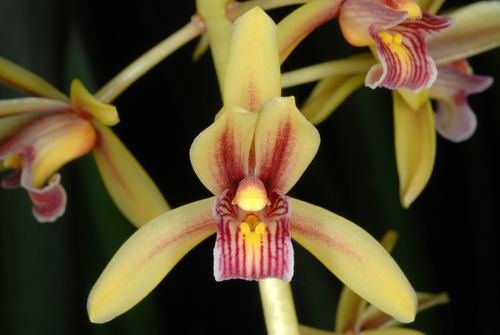
Cymbidium & dendrobium orchids
Cymbidium: terrestrial orchid with grassy leaves and long spikes of waxy flowers in winter and spring, 60-90 cm. Dendrobium nobile: cane-like orchid with flowers along the stems in spring, 30-60 cm.
Planting
Cymbidium: pot with a bark-based, free-draining mix; keep 3 pseudobulbs per division. Dendrobium: small pot, airy bark mix, tight pot encourages flowers.
Site & soil
Open, airy bark mix; bright position, some direct morning sun.
Watering
Cymbidium: water regularly in summer, let it dry slightly between. Dendrobium: water often in summer; nearly stop in winter. Wet roots rot.
Natural feeding plan
- Gentle feeding: a thin top dressing of Worm compost (vermicompost) or compost in spring, and dilute Fermented plant juice (FPJ) or Fish amino acid (FAA) 1:1000 (1 ml in 1 litre of water) every 3-4 weeks in the growing season only.
- Use half strength; none in winter rest.
- Cymbidium takes a bit more feeding in summer.
Care through the season
Move outdoors in shade for summer; bring in before cold. Cut spikes after flowering. Dendrobium canes flower on old growth: do not cut them. Cymbidium likes to sit tight in its pot, so a freshly divided plant may flower less the following season until it has filled the pot again; old pseudobulbs that shrivel and dry out show that the clump is ageing.
Harvest
Cutting and using: cymbidium cut flowers last 4-6 weeks in a vase; plants live for decades.
More growing tips
- Light: bright, some morning sun.
- Water: regular in summer; dry rest for dendrobium.
- Temperature: cymbidium hardy to about -2 °C; dendrobium min about 5 °C.
- Flowering time: cymbidium winter-spring; dendrobium spring.
- Height and spread: 30-90 cm.
- Propagation: division, keikis.
- Toxicity: generally regarded as non-toxic to cats, dogs and people.
- Lifespan: decades.