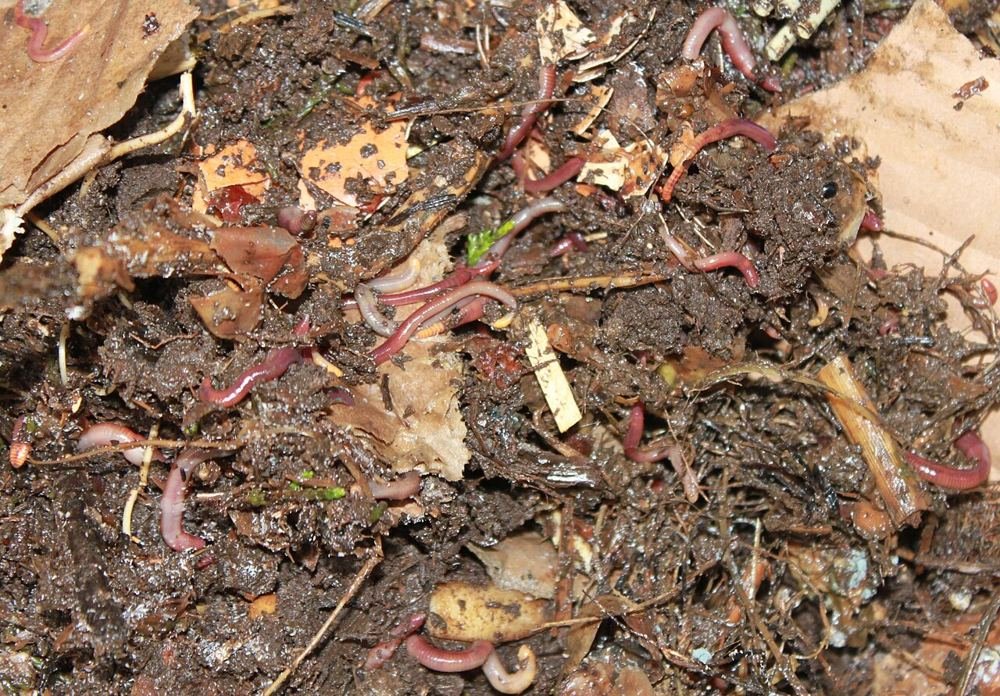
Worm compost (vermicompost)
Compost made by composting worms; rich in nutrients and bacteria. The liquid (worm juice) is a good tea starter.
Conditions
Cool, dark, moist.
What you need
- Worm bin: about 60 x 40 cm and 20-30 cm deep, with drainage holes and a lid, or a wooden pallet bin or a trough
- Bedding: shredded cardboard, straw or dry leaves, enough to fill the bin about two thirds
- Composting worms (red wigglers, Eisenia fetida): about 500 g to start a small bin
- Kitchen scraps: chopped vegetable and fruit waste, tea bags, coffee grounds, a little crushed eggshell
- Water: a spray bottle
- Straw, a tarp or a lid to cover
- Tray or bucket under the bin to catch the liquid (worm juice)
How to make it
- Make or choose a bin that is dark, has a lid and has drainage holes in the base. A perforated plastic bin, a pallet frame or a trough all work. Place it in a cool, shaded spot out of rain and sun.
- Prepare the bedding: tear cardboard or straw into small pieces and soak it in water for 5-10 minutes. Squeeze it until only 2-3 drops fall out, so it feels like a wrung-out sponge.
- Put a straw or cardboard base on the bottom of the bin, then fill about two thirds of the bin with moist bedding, fluffed up loose.
- Add a first small handful of kitchen scraps and bury it in the bedding. Leave the bin 2-3 days before adding the worms.
- Add the worms to the surface. They will burrow down within minutes. Keep the lid off for a short time with a light on top if they keep trying to leave.
- Wait a couple of days, then feed. Add chopped scraps no more than about 2.5 cm deep on one area of the bedding and cover with 2-5 cm of bedding or straw to keep flies away.
- Feed again only when most of the previous food has gone. Never overfeed: a smelly bin is almost always overfed.
- Check the moisture each week. If it is dry, mist it; never pour water in. Keep the bin at about 15-25 °C by moving it or adding insulation.
- Cover the top with straw and a tarp or lid, and collect any dark liquid from the tray (worm juice).
- After about 3 months most of the bin should be dark crumbly castings. Move the worms by feeding only on one side for 2-3 weeks so they migrate there.
- Harvest the castings from the empty side or from the bottom, and refill with fresh bedding.
- Store or use the castings at once; keep the worms and a handful of old castings as the start of the next round.
How much it makes
The example bin is about 60 x 40 cm and 20-30 cm deep, so roughly 48-72 litres, filled two thirds with bedding and started with about 500 g of worms. The recipe does not state how much castings it gives; for tea, a handful of castings in 10 litres of water makes 10 litres.
Signs it worked
Ready castings are dark brown to black, fine and crumbly, smell earthy, and contain few recognisable food pieces. The worms move on to the fresh food. A failed bin smells rotten or sour, is very wet, or has dead worms.
How to use it
- Top-dress: spread a 1-2 cm layer of castings around plants, or mix a handful into each planting hole.
- Mix some castings into potting mix for seed trays and pots.
- For worm Aerated compost tea, soak a handful of castings in 10 L of chlorine-free water, aerate for 24 hours (see Aerated Aerated compost tea), and use at once.
- Worm juice from the tray is strong; dilute it as in How to dilute: the 1:1000 (1 ml in 1 litre of water) rule & seawater before using it on plants, and do not use it on leaves of crops eaten raw.
- Use castings or tea in the morning and water in lightly.
Storage
Keep castings in a shaded, breathable sack or covered pile, slightly damp, for a few months. Worm juice should be used within a few days. Foul smells or mould mean it has gone off.
If something goes wrong
- Bin smells rotten: too much food or too wet. Stop feeding, mix in dry shredded cardboard, and leave the lid open for a day.
- Worms crawl out or die: too hot, too wet, too acid, or too salty. Move the bin to cool shade and remove citrus and onion.
- Fruit flies: food is exposed. Bury food and cover with 2-5 cm of bedding.
- Bin is dry and worms are slow: bedding too dry. Mist it until it feels like a wrung-out sponge.
- Ants or pests: bin too dry or sweet food left on top. Cover food and keep moisture even.
- Castings are wet and clumpy: poor drainage. Add dry bedding and check the drainage holes.
Cautions
Don't feed citrus, onion, garlic, hot peppers, meat or bones. Castings carry worm eggs. Also avoid oily and salty foods and pet waste. Wash hands after handling, and wash or peel crops that grow close to the ground.