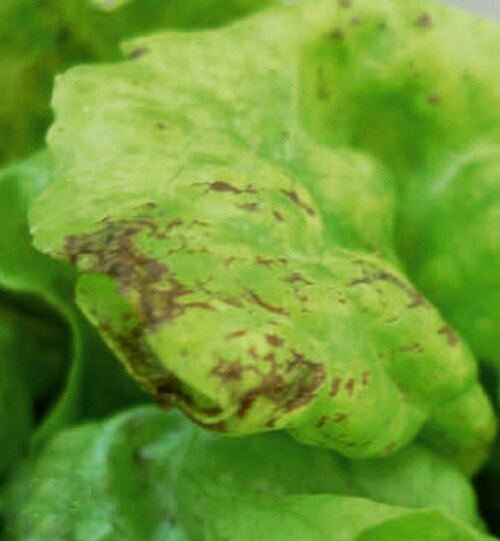
Lettuce big-vein & lettuce mosaic
Two virus diseases of lettuce. Big-vein is carried by a soil organism and lettuce mosaic is carried in seed and by aphids.
- Fermented herbal tonic (OHN)
- other rates are on the linked recipe cards
- Sticky & pheromone traps
- Row covers & barriers
- Insecticidal soap
- Ladybirds & lacewings
How to recognise
Big-vein: leaves are ruffled and stiff, and the veins look wide and pale green or clear while the tissue between stays dark. Mosaic: light and dark green mottling, curled or crinkled leaves, stunted plants, and heads that do not form well.
Causes & conditions
Big-vein: cool (below about 20 °C), wet, compacted soil; the soil organism (Olpidium) can survive for years. Mosaic: infected seed is the main source; aphids then spread it from plant to plant, and weeds can carry it.
What to do
- No cure once plants are infected.
- Use certified, virus-tested seed and resistant or tolerant varieties.
- For big-vein, sow in warmer weather, improve drainage and soil structure, and rotate away from lettuce for several years.
- For mosaic, remove infected plants early, keep weeds down, and reduce aphids with reflective mulch, insect netting and ladybirds or lacewings.
- There is no cure for the virus itself, so remove infected plants and control the insects that carry it with sticky traps (Sticky & pheromone traps), Row covers & barriers, Insecticidal soap and ladybirds and lacewings (Ladybirds & lacewings).
- Strengthen healthy plants with Fermented herbal tonic (OHN).
Cautions
Never save seed from lettuce that showed mosaic. Do not compost infected plants.
Photos

Crops it affects
Background sources: Plant Pathology: Concepts and Laboratory Exercises (2004), the Turkish Ministry of Agriculture and Forestry plant-protection instructions, and CABI and EPPO; CABI Crop Protection Compendium and EPPO Global Database entries for Mirafiori lettuce big-vein virus, Lettuce mosaic virus. See Sources and references. Talk transcripts on plant pathology and diagnosis: see Sources and references.