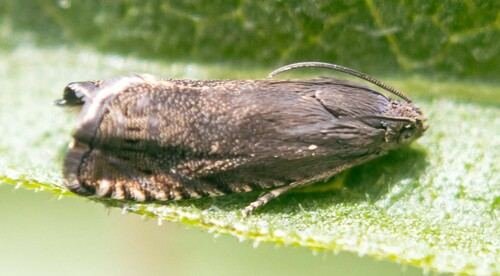
Pea moth
Cydia nigricana
Small brown moth whose caterpillars eat the peas inside the pod, causing the maggoty peas known to every home gardener.
🌿प्राकृतिक उपाय
📅कबFlowering to pod set
🌾फसलेंPea, sometimes broad bean and lentil
पहचान कैसे करें
Pods look normal outside; inside, a creamy-white caterpillar with a dark head, frass and half-eaten peas; a small entry hole is hard to see.
कारण और स्थितियाँ
Moths fly in early summer and lay eggs on leaves near flowering pea plants; caterpillars enter pods and later drop to the soil to overwinter in cocoons. Worse where peas are grown in the same place every year.
क्या करें
- Time sowing so that flowering falls outside the moth flight period (very early or late sowings).
- Cover plants with fine insect mesh from flowering to pod set.
- Hang pheromone traps to time the covering.
- Rotate peas to a different bed each year, ideally at least 250 metres away.
- Dig the soil after harvest to expose cocoons to birds.
- Bt (बैसिलस थुरिंजिएन्सिस) does not help, because larvae feed inside pods.
- Spray Bt (बैसिलस थुरिंजिएन्सिस) or neem leaf and seed extract (नीम की पत्ती और बीज का अर्क) on young caterpillars, set pheromone traps (चिपचिपे और फेरोमोन ट्रैप), cover crops with कतार आवरण और रुकावटें, and release parasitic wasps (ट्राइकोग्रामा ततैया) or insect-killing fungi (ब्यूवेरिया और मेटाराइज़ियम (कीट-नाशक फफूँद)).
सावधानियाँ
Peas mostly pollinate themselves, so mesh at flowering does not reduce the crop. Put it on before the first flowers open.
तस्वीरें

