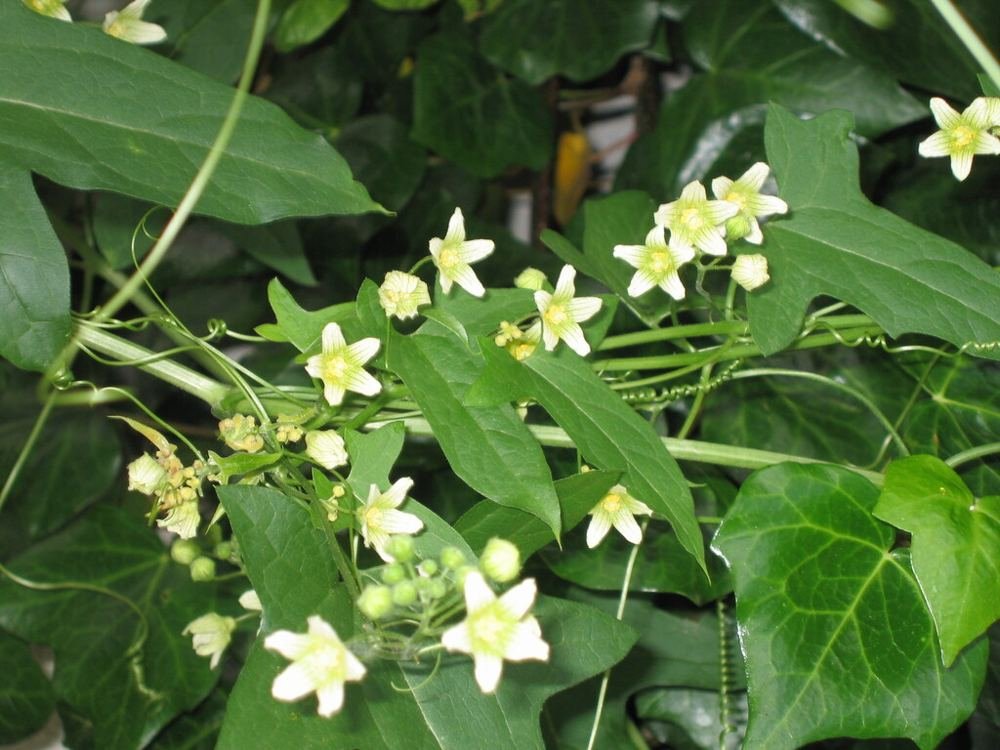
Wild bryony
Climbing perennial of the gourd family with a large underground tuber and clusters of red berries; it scrambles over hedgerows, vineyards and garden fences. The root and berries are toxic.
How to recognise
Slender, rough climbing stems with coiled tendrils; palmately lobed, rough leaves like a small grape or ivy leaf; small greenish-white flowers (male and female on separate plants); shiny red berries in autumn. Not to be confused with black bryony, which has glossy heart-shaped leaves and no tendrils.
What it tells you about your soil
Hedgerows, fence lines, field edges and neglected orchard and vineyard borders with some shade and moisture.
Natural control
- Cut the vines before the berries ripen and dig out the whole tuber, which can be as thick as a forearm.
- Repeated cutting at ground level exhausts the root over a few seasons.
- Remove the climbing stems from trees and trellises by hand while they are young.
- Keep the borders mowed or mulched to stop birds from seeding new plants.
Uses
Historically a medicinal plant, but not safe to use at home.
Cautions
The root and berries are poisonous: a few berries can make a child seriously ill. Wear gloves when handling the plant and keep the berries away from children, pets and livestock.