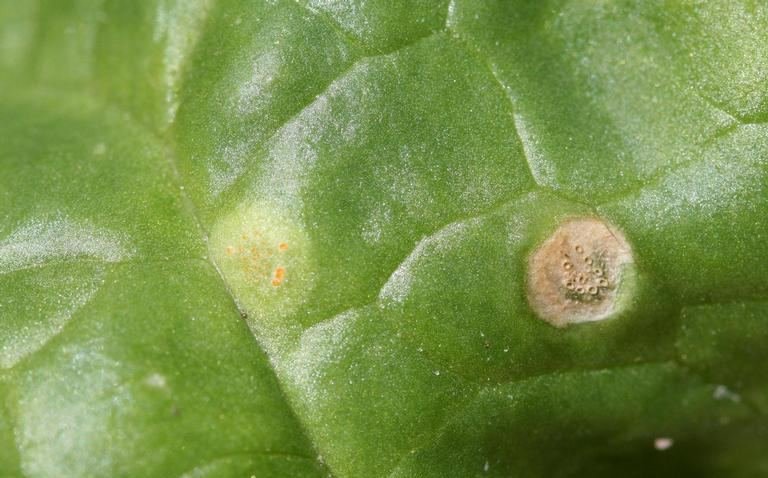
Spinach white rust and Stemphylium leaf spot
Albugo occidentalis; Stemphylium botryosum
Two leafy-green diseases of spinach. White rust is caused by a water-mould; Stemphylium leaf spot is a fungus carried on seed.
🌿Natural remedies
📅WhenCool, damp seasons: autumn, winter and spring
🌾CropsSpinach
How to recognise
White rust: pale yellow patches on the upper side and creamy white blisters beneath, which burst into white powder. Stemphylium: small round tan or grey spots on older leaves, sometimes with a dark edge, and they merge and dry out.
Causes & conditions
Spores survive in soil and debris for years, and may arrive with seed. White rust likes cool, damp weather around 15 to 20 degrees Celsius and wet leaves; Stemphylium prefers warm, humid weather and crowding.
What to do
- Use clean seed and grow resistant varieties where sold.
- Rotate out of spinach for 3 years.
- Remove debris after harvest.
- Water at the base in the morning, avoid dense sowing, and pick before leaves yellow.
- Horsetail tea or Bacillus subtilis (hay bacillus) in damp weather.
- Support the plant with Horsetail tea as a silica spray, and use Fermented herbal tonic (OHN) (Fermented herbal tonic (Fermented herbal tonic (OHN))) for plant vigour.
- Milk spray for powdery mildew or Baking soda spray can slow mildews, and Bacillus subtilis (hay bacillus) protects leaves and roots.
- Sulfur (Sulfur) or copper (Copper & Copper & Bordeaux mixture) are a last resort, used carefully.
- After an attack, give the plants the recovery mix (Recovery mix for sick plants).
Cautions
Blistered leaves are not marketable; pick them off and do not compost.