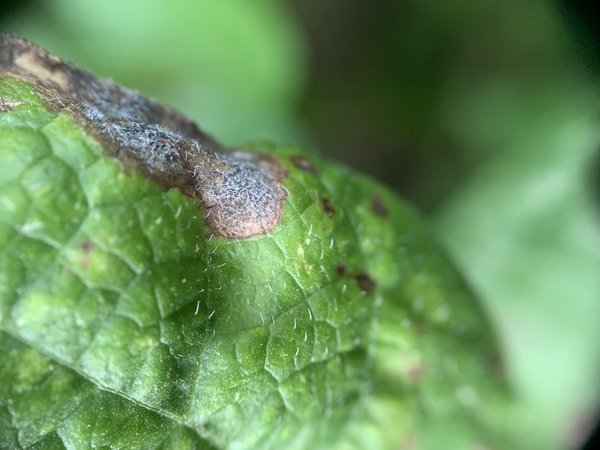
Faba bean chocolate spot
Botrytis fabae
Fungal leaf disease of faba bean that can quickly spread into a severe blight in cool, wet weather.
🌿Natural remedies
📅WhenFlowering and pod set, especially after rain in winter and spring
🌾CropsFaba bean; the closely related Botrytis cinerea causes similar grey mould in lentil and pea
How to recognise
Small round reddish-brown to chocolate spots on leaves, stems and flowers. In wet weather spots merge into large dark blotches, stems blacken and leaves drop.
Causes & conditions
Cool, humid, rainy weather (15 to 20 degrees Celsius), dense stands, high nitrogen and low potassium. The fungus survives on crop residues and spreads by rain splash and wind.
What to do
- Rotate with cereals, leaving at least three to four years between faba bean crops.
- Sow on well-drained ground at wide spacing.
- Use tolerant varieties and healthy seed.
- Remove debris after harvest.
- Keep potassium and phosphorus balanced and avoid excess nitrogen.
- Fermented herbal tonic (OHN) 1:1000 (1 ml in 1 litre of water) as a preventive spray, with Horsetail tea.
- Support the plant with Horsetail tea as a silica spray, and use Fermented herbal tonic (OHN) (Fermented herbal tonic (Fermented herbal tonic (OHN))) for plant vigour.
- Milk spray for powdery mildew or Baking soda spray can slow mildews, and Bacillus subtilis (hay bacillus) protects leaves and roots.
- Sulfur (Sulfur) or copper (Copper & Copper & Bordeaux mixture) are a last resort, used carefully.
- After an attack, give the plants the recovery mix (Recovery mix for sick plants).
Cautions
Start preventive sprays before the disease spreads; it is hard to stop once leaves are blackened.
Photos