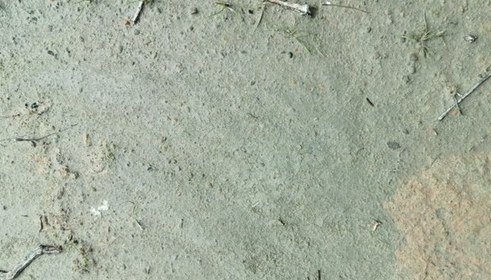
 Photo: Roberto Lázaro, Cristina Gascón, Cecilia Rubio / Frontiers in Microbiology 14:1171096 · CC BY 4.0 · Wikimedia Commons
Soil crusting and surface sealing
A thin hard skin that forms on bare soil when raindrops or sprinkler water break up the surface crumbs and dry out.
📅WhenAt sowing and seedling emergence; before heavy rain
🌾CropsAll; especially small-seeded crops such as carrot, onion, lettuce, beet and spinach
🔍How to recognise
Hard, smooth, pale or cracked crust after rain or irrigation; seedlings fail to push through; water runs off or pools; bare patches in the row.
🌦️Causes & conditions
Bare soil, silty or fine soils low in organic matter, sodic soil, tilling to a fine seedbed, heavy raindrop impact and fast-drying wind or sun.
🌱What to do
- Keep soil covered: mulch with straw, leaf litter or compost.
- Add compost and well-rotted manure to build stable crumbs.
- Grow cover crops and green manures.
- Stop fine tilling.
- Water gently with drip or a fine rose.
- Sow seed under a thin layer of compost or sand.
- Break a fresh crust lightly with a rake.
- Soil soaks with indigenous microorganisms or fungal Aerated compost tea help build structure over seasons.
⚠️Cautions
Do not rake deeply when wet. Gypsum helps only where the soil is sodic.