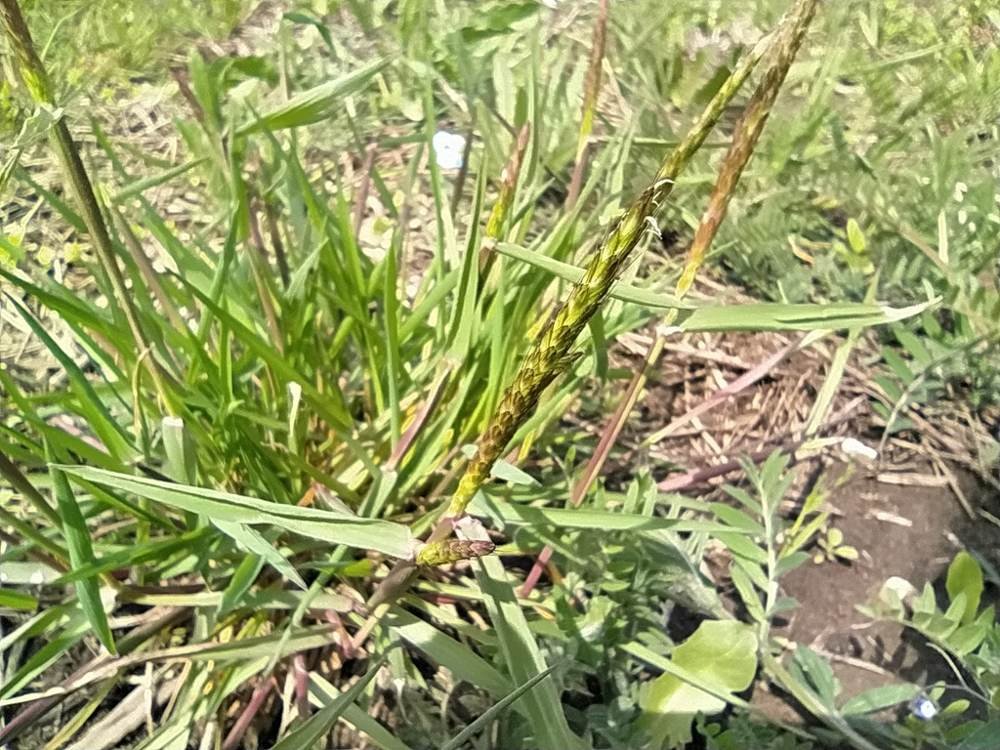
Blackgrass
Alopecurus myosuroides
Winter annual grass and one of the main weeds of winter cereals in cool, wet regions, including Thrace and the Marmara region of Turkey; resistant populations are widespread.
🔄LebenszyklusWinter annual: sprouts mainly in autumn, heads in late spring, seeds shed before cereal harvest.
🌬️Verbreitung durchSeed only, in soil on machinery and in contaminated grain.
📍Wo es zum Problem wirdWheat, barley, oilseed rape, other winter crops
Erkennungsmerkmale
Tufted, with flat, hairless leaves and no ear-like projections at the leaf base. The head is a slender, tapering, purple-green cylinder, like a small foxtail. Seedlings have reddish, purple-tinged bases.
Was es über Ihren Boden verrät
Heavy, wet soils; autumn-sown cereals sown early; repeated winter cereals and minimum tillage, which leaves seed near the surface.
Natürliche Bekämpfung
- Delay autumn sowing and use a stale seedbed.
- Rotate with spring crops, forage or fallow.
- Plough to bury seed (seed deeper than a few centimetres rarely emerges).
- Use dense, competitive crops and good drainage.
- Hand-pull or cut patches before seeds shed.
- Clean machinery between fields.
- Seeds are short-lived, so three seed-free years strongly reduce populations.
Verwendung
Little use; young plants are eaten by livestock before heading.
Vorsicht
Do not move soil, straw or combines from infested to clean fields without cleaning. Treat resistant patches as a rotation problem rather than hoping for one fix.